Pharos Underwater Notes Mansoura · Est. 2016 · ISSN 2735-4471
Independent field-report journal · Mansoura dive-log · Underwater archaeology of Alexandria

Two thousand years under the Mediterranean. The cities have not moved; only the water has changed level.

Pharos Underwater Notes is a small dive-log journal documenting the underwater archaeology of the submerged ruins along the Alexandria coast — the sunken Greco-Egyptian city of Heracleion-Thonis at the Canopic mouth of the Nile, the temple complex at Canopus, the granite and limestone blocks of the Ptolemaic Pharos lighthouse in the eastern harbour, and the broader survey of the Alexandrian eastern harbour basin. We publish field reports from our own twice-yearly dive seasons and from the major institutional expeditions whose dive teams allow us to log alongside, in plain language for the curious reader and in structured field-report form for the academic researcher.

What the notes cover

Four submerged sites, ten years of field reports.

The journal was founded in November 2016 by Tarek Ramadan, a former Egyptian Navy diver who left the service in 2012 and spent four years as an independent dive operator on the Alexandria coast before establishing the journal. The notes cover four documented submerged-archaeological sites along the western Delta and the Alexandria coast, plus a small archive of more distant comparative material from the Sinai and Red Sea wreck sites. Field reports are written from the dive boat in the working logbook, transcribed in the Mansoura office within a week, and published in the monthly bulletin after a two-editor review.

Stone block from Heracleion-Thonis submerged temple complex −6.4 m
Site 01 · Canopic mouth

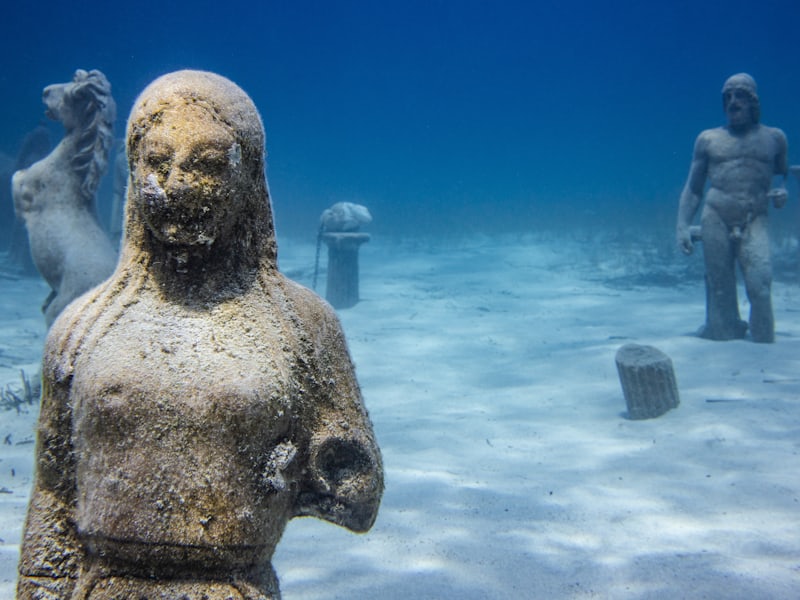
Heracleion-Thonis

The Greco-Egyptian port city that sank into the Mediterranean between the second and eighth centuries CE, rediscovered by Franck Goddio's team in 2000. Our reports cover the western and southern survey grids and the temple-of-Khonsu inscription stelae.

Read the field file →
Submerged Pharos lighthouse limestone block on the seabed −8.2 m
Site 02 · Eastern harbour

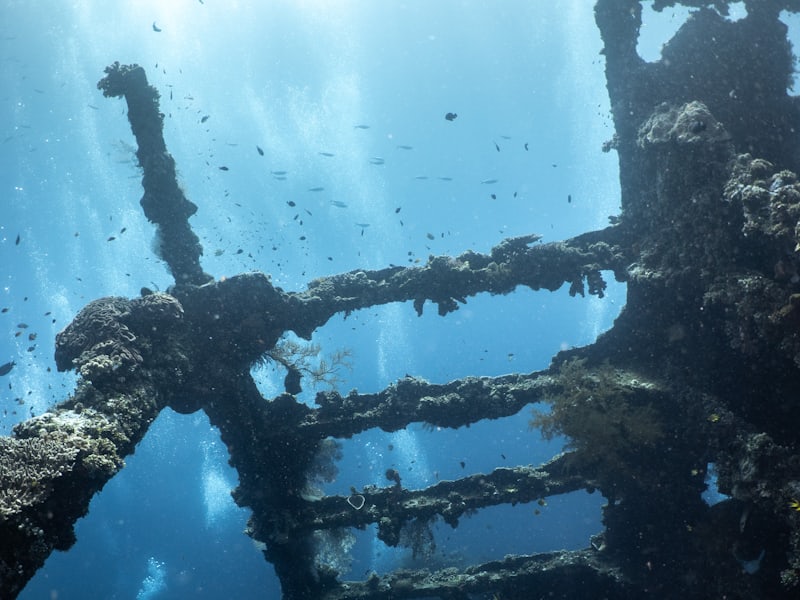
Pharos lighthouse blocks

The scattered granite and limestone blocks from the Ptolemaic Pharos lighthouse, collapsed in successive earthquakes between 956 and 1303 CE, surveyed since the late 1960s and now best-documented at the eastern harbour mouth.

Read the field file →
Diver documenting submerged sphinx fragment at Canopus −5.8 m
Site 03 · Canopic

Canopus & the East Canopic mouth

The temple complex at Canopus, the Ptolemaic festival site that sank with the broader Canopic-mouth subsidence, and the eastern arm of the Canopic shore approach.

Read the field file →
How field reports are written

From dive boat to bulletin, in seven days.

Every field report follows a documented seven-day cycle. Day one, the working logbook on the boat at the moment of the dive. Day two, transcription in the Mansoura office while the dive is still fresh. Day three, photograph and depth-measurement cross-reference. Days four and five, editorial peer review by the second editor. Day six, fact-check against the published institutional records of the relevant expedition. Day seven, publication in the next available bulletin slot.

Step 01 · On the boat

The working logbook entry.

Each dive is logged in waterproof field notebook with depth, time at depth, water temperature, visibility, and the specific structures or finds documented during the dive. Two divers cross-confirm the entry before surfacing for the surface interval.

Step 02 · Mansoura transcription

Office transcription, same week.

The handwritten field logbook is transcribed in the Mansoura office within seven days of the dive. The transcription cross-references with the boat's GPS log, the dive-computer profile and the photographic record from the underwater camera rig.

Step 03 · Photographic plate

Calibrated underwater photography.

Underwater photographs are produced under standardised lighting at known white-balance settings, with a colour-reference card visible in each frame for post-dive colour calibration. The standard rig is documented in the dive-team-equipment file.

Step 04 · Two-editor review

Peer review before publication.

Every field report is reviewed by a second editor with relevant site experience before publication. Disagreements about interpretation are documented openly in the report; the two-editor signature is the journal's standing publication threshold.

Why a small journal exists here

Because the major institutional expeditions publish slowly, and the dive seasons keep moving.

The underwater archaeology of Alexandria is well-served by major institutional projects — the European Institute for Underwater Archaeology, the Centre d'Études Alexandrines, the Hellenic Centre for Maritime Research and the long-running Goddio Foundation expeditions — but the institutional publication cycle is slow, typically four to nine years from dive season to peer-reviewed paper. Pharos Underwater Notes fills the working gap. We publish field reports in the bulletin within months of the dive, with the institutional projects' consent where we have logged alongside them and as independent dive-log observations where we have not. The institutional publications remain the canonical academic record; the bulletin is the working real-time complement.

The journal is read by approximately one thousand four hundred subscribers, including the dive-coordination offices of the four major institutional expeditions named above, by the Egyptian Ministry of Antiquities' submerged-archaeology unit in Alexandria, by university maritime-archaeology programmes in Cairo, Alexandria, Aix-Marseille and Southampton, and by approximately three hundred non-specialist readers who follow the field for personal interest. The journal's editorial team and the funding structure are described on the about page; the services page covers the methodology in detail.

Mansoura dive team checking equipment on the boat at sunrise
Morning equipment check — Alexandria coast, March 2026 season opener
10
Dive seasons documented since 2016
487
Field-report dives in the journal's archive
1 400+
Bulletin subscribers across 24 countries
4
Documented submerged sites in active rotation
Reader questions

Briefly answered.

Can I dive these sites?

The Alexandria coast submerged sites are restricted under Egyptian maritime-heritage law. Recreational diving is permitted at three controlled sites (the eastern Pharos block field, the western Heracleion survey grid, and the shallow Canopus approach) through licensed dive operators registered with the Ministry of Antiquities; the journal does not run such tours and does not list operators. Independent diving on the sites is not permitted.

How does Pharos Underwater Notes relate to the Goddio Foundation expeditions?

Collegial and informal. Tarek Ramadan has logged dives with the Goddio team on three occasions (2018, 2020 and 2024); the field reports from those alongside-dives were published with the foundation's written consent. The journal does not depend on the foundation for access or funding; we are not an arm of any institutional expedition. The foundation's own publications remain the academic-record source for their work.

What about new finds — does the journal publish them?

The journal does not publish previously undocumented finds; the documentation of new material is the role of the institutional expeditions under their permits from the Egyptian Ministry of Antiquities. Where one of our own divers spots material not previously logged, the observation is referred to the institutional dive coordinator with jurisdiction over the relevant survey grid; the institutional team decides whether and when to publish. The journal documents what is already in the institutional record.

What about the climate-change implications for these sites?

The Mediterranean sea level has risen approximately 18 cm at the Alexandria coast since 1980 and is projected to rise a further 30 to 60 cm by 2080 under medium-emission scenarios. The submerged sites are already below sea level and the rise affects accessibility (deeper dives) and structural stability (increased wave action on the higher remnants). The 2025 season summary includes the journal's annual climate-change observations; we do not advocate on the political dimension.

Subscribe to the bulletin

One field-report bulletin a month. Sixteen to twenty-four pages, dive by dive.

Subscribers receive the monthly bulletin emailed on the first Sunday of every month with the new field reports, the photograph plates from the dive season in progress, and the running notes from the Mansoura office. Three tiers from twenty euros a year.

Subscription tiers Write to the desk